Search Result
Results for "
Acetic_acid,_2-[3-[_1E_-3-[2-_4-methylbenzoyl_-1H-pyrrol-1-yl]-1-prop
" in MedChemExpress (MCE) Product Catalog:
5
Biochemical Assay Reagents
11
Isotope-Labeled Compounds
| Cat. No. |
Product Name |
Target |
Research Areas |
Chemical Structure |
-
- HY-W008253
-
-
-
- HY-17510
-
|
(±)-Gossypol-Acetic acid; BL-193 (Acetic acid)
|
Bcl-2 Family
|
Cancer
|
|
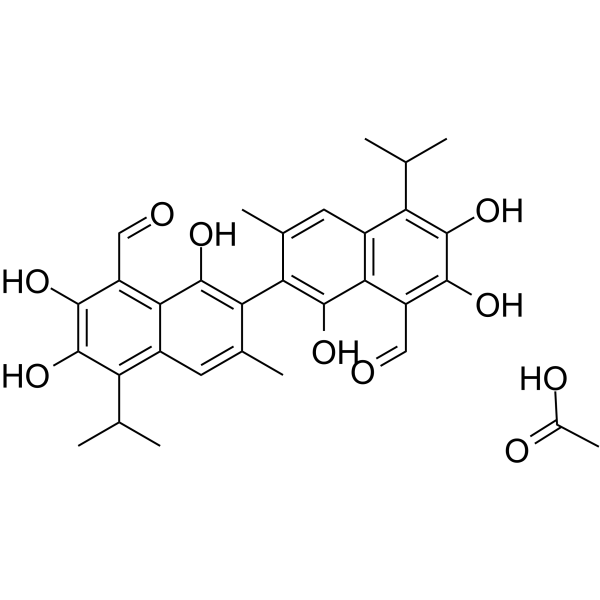
Gossypol acetic acid ((±)-Gossypol-acetic acid) binds to Bcl-xL protein and Bcl-2 protein with Kis of 0.5-0.6 μM and 0.2-0.3 mM, respectively.
|
-
-
- HY-Y0319B
-
|
Potassium acetate
|
Environmental Pollutants
Biochemical Assay Reagents
|
Infection
Cancer
|
|
Acetic acid potassium 99% (Potassium acetate) is a potassium salt employed to replenish electrolytes, for restoration of water-electrolyte balance. Acetic acid potassium 99% can employ in DNA and protein purification. Acetic acid potassium 99% has been used to prepare neutralizing solution for alkaline lysis of bacteria and activated carbon .
|
-

-
- HY-W007566
-
|
|
Endogenous Metabolite
|
Endocrinology
|
|
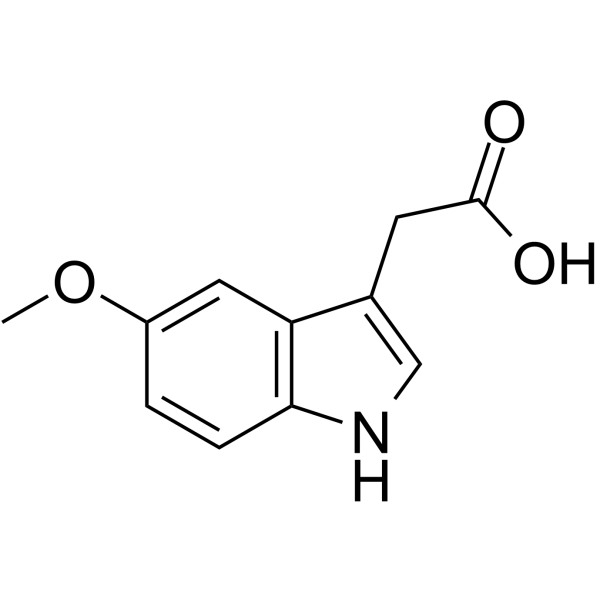
5-Methoxyindole-3-acetic acid is a metabolite of Melatonin (HY-B0075). 5-Methoxyindole-3-acetic acid significantly prolongs the estrous cycle, increases uterine weight, and induces ovarian follicular cysts in female rats, while also regulating the levels of related hormones .
|
-
-
- HY-15464A
-
|
AT-101 (Acetic acid); (-)-Gossypol Acetic acid; (R)-Gossypol Acetic acid
|
Bcl-2 Family
Autophagy
|
Cancer
|
|
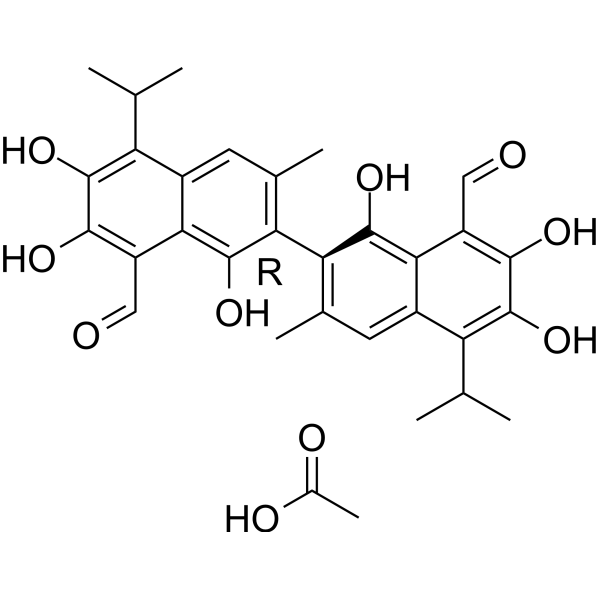
(R)-(-)-Gossypol acetic acid (AT-101 (acetic acid)) is the levorotatory isomer of a natural product Gossypol. AT-101 is determined to bind to Bcl-2, Mcl-1 and Bcl-xL proteins with Kis of 260±30 nM, 170±10 nM, and 480±40 nM, respectively.
|
-
-
- HY-W008253S2
-
|
|
Isotope-Labeled Compounds
Endogenous Metabolite
|
Others
|
|
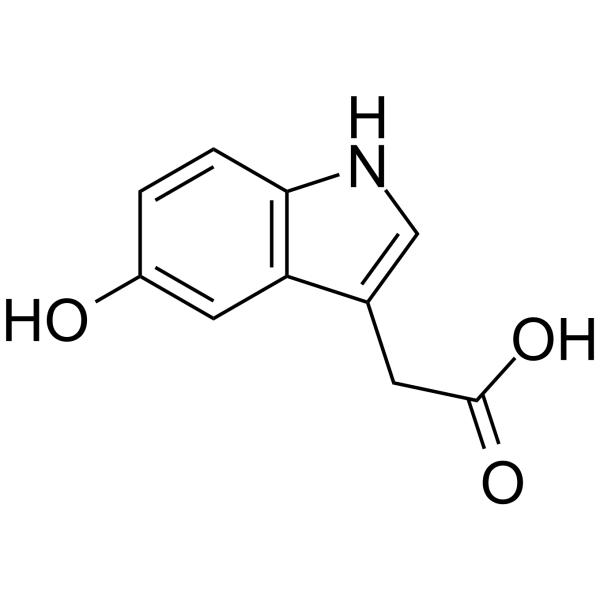
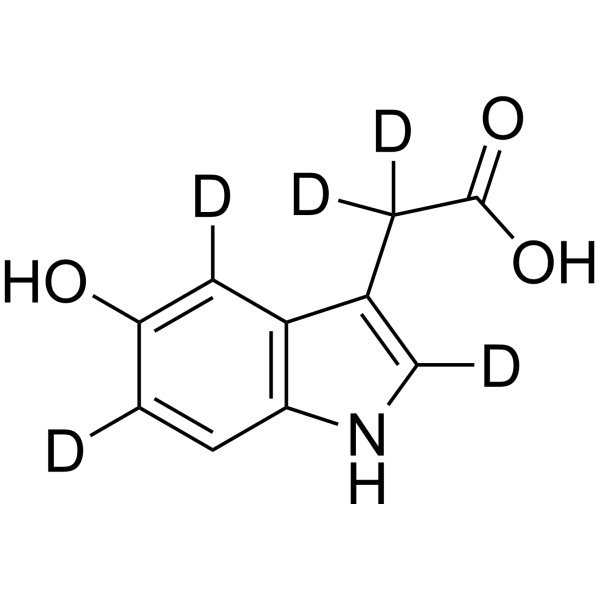
5-Hydroxyindole-3-acetic acid-d5 is the deuterium labeled 5-Hydroxyindole-3-acetic acid (HY-W008253) . 5-Hydroxyindole-3-acetic acid is the main metabolite of serotonin or metanephrines, which can be used as a biomarker of neuroendocrine tumors .
|
-
-
- HY-W012883
-
-
-
- HY-P10579
-
123B9
1 Publications Verification
|
Ephrin Receptor
|
Cancer
|
|
123B9, a tumor-homing agent, is a potent and selective EphA2 agonist with a Kd value of 4.0 μM. 123B9 selectively targets the EphA2 tyrosine kinase receptor ligand-binding domain. 123B9 does not appreciably inhibit the ligand binding domains of the most closely related EphA3 and EphA4 receptors .
|
-

-
- HY-W017831
-
|
|
Biochemical Assay Reagents
Drug Intermediate
|
Others
|
|
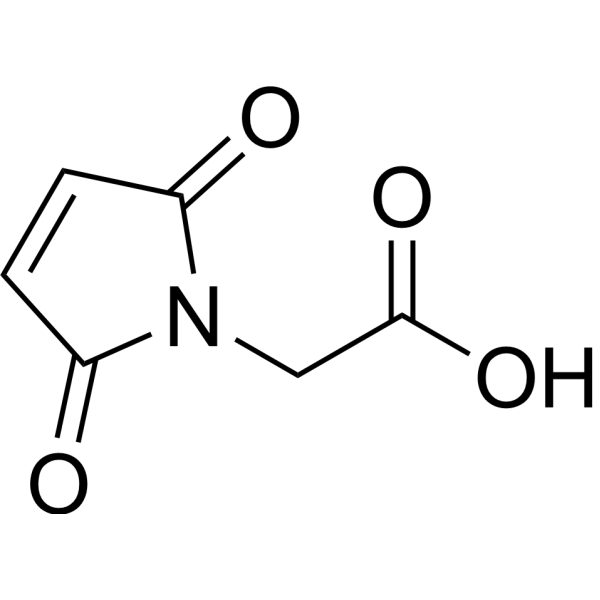
2-Maleimido acetic acid is a maleimide-containing carboxylic acid ligand used to prepare Pt(IV) complexes capable of undergoing Diels-Alder reaction with furan derivatives for drug targeting and delivery applications .
|
-
-
- HY-W006267
-
|
4-Cl-IAA
|
Endogenous Metabolite
|
Others
|
|
4-Chloroindole-3-acetic acid (4-Cl-IAA) is a chlorinated analogue of indole-3-acetic acid (IAA) (HY-18569) auxin that functions as a plant hormone, which is found in the seeds of Medicago truncatula、Melilotus indicus and Trifolium .
|
-

-
- HY-D1084
-
-
-
- HY-139040
-
|
|
PPAR
|
Metabolic Disease
|
|
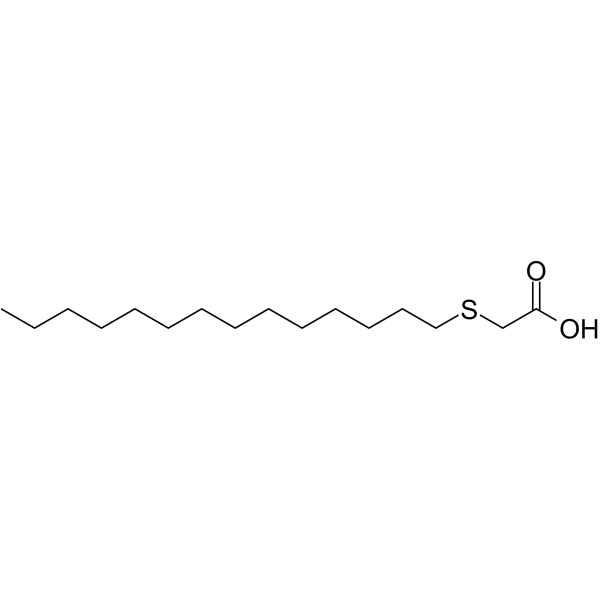
2-Tetradecylthio acetic acid is a pan-peroxisome proliferator activated receptor (pan-PPAR) activator. 2-Tetradecylthio acetic acid induces hypolipidemia. 2-Tetradecylthio acetic acid reduces plasma lipids and enhances hepatic fatty acid oxidation in rodents. 2-Tetradecylthio acetic acid increases the expression of genes involved in fatty acid uptake, activation, accumulation, and oxidation .
|
-
-
- HY-W019828
-
-

-
- HY-W076878
-
|
|
PROTAC Linkers
|
Cancer
|
|
tert-Butyl 4-(prop-2-yn-1-yl)piperidine-1-carboxylate is a PROTAC linker that can be used in the synthesis of PROTACs.
|
-

-
- HY-W008253R
-
|
|
Reference Standards
Endogenous Metabolite
|
Neurological Disease
Cancer
|
|
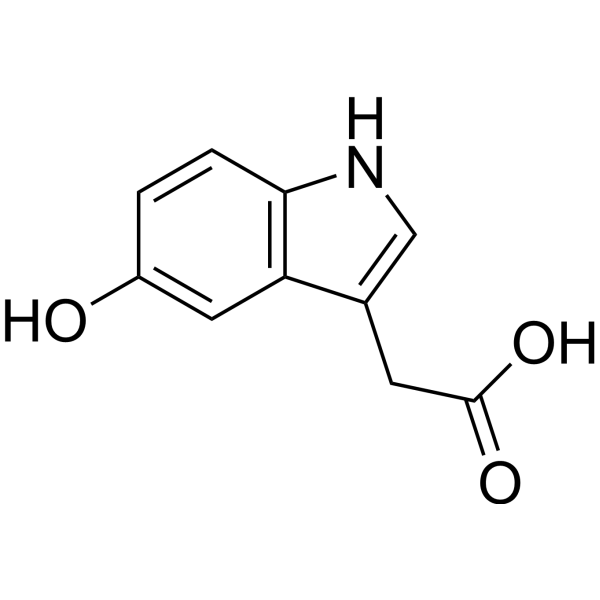
5-Hydroxyindole-3-acetic acid (Standard) is the analytical standard of 5-Hydroxyindole-3-acetic acid. This product is intended for research and analytical applications. 5-Hydroxyindole-3-acetic acid is the main metabolite of serotonin or metanephrines, which can be used as a biomarker of neuroendocrine tumors.
|
-
-
- HY-Y0319D
-
|
|
Endogenous Metabolite
AMPK
Reactive Oxygen Species (ROS)
Caspase
Fungal
PPAR
|
Infection
Neurological Disease
Metabolic Disease
Inflammation/Immunology
Cancer
|
|
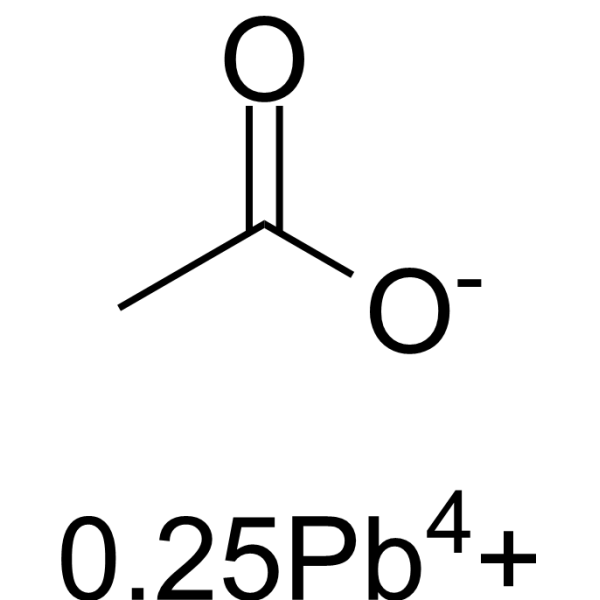
Acetic acid lead is a carboxylic acid and short-chain fatty acid (SCFAs). Magnesium acetate tetrahydrate activates AMPK, increases ROS, cleaved caspase 9, PPARα, downregulates SREBP-1c, ChREBP expression. Acetic acid lead exhibits antifungal activity against Saccharomyces cerevisiae W303-1A. Acetic acid lead regulates energy metabolism. Acetic acid lead has anticancer activity against gastric cancer. Acetic acid lead induces writhing reaction and ulcerative colitis. Acetic acid lead can be used in the researches for gastric cancer, ulcerative colitis, hepatic steatosis, and pain .
|
-
-
- HY-W040681
-
-
-
- HY-W008253S1
-
|
|
Endogenous Metabolite
|
Neurological Disease
Cancer
|
|
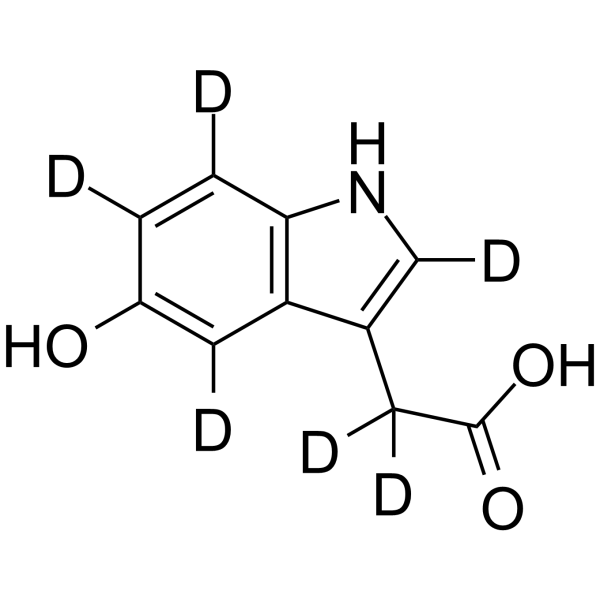
5-Hydroxyindole-3-acetic acid-d6 is the deuterium labeled 5-Hydroxyindole-3-acetic acid. 5-Hydroxyindole-3-acetic acid is the main metabolite of serotonin or metanephrines, which can be used as a biomarker of neuroendocrine tumors.
|
-
-
- HY-W001687
-
|
|
Drug Intermediate
|
Others
|
|
tert-Butyl (1H-pyrrol-1-yl)carbamate is a drug intermediate for synthesis of various active compounds.
|
-

-
- HY-42476
-
|
1-(4-Amino-2-methylbenzoyl)-7-chloro-1,2,3,4-tetrahydro-5H-1-benzazepin-5-one
|
Drug Intermediate
|
Others
|
|
Tolvaptan Impurity (1-(4-Amino-2-methylbenzoyl)-7-chloro-1,2,3,4-tetrahydro-5H-1-benzazepin-5-one) is a drug intermediate for synthesis of various active compounds.
|
-

-
- HY-W087467
-
|
|
PROTAC Linkers
|
Cancer
|
|
tert-Butyl 4-(prop-2-yn-1-yl)piperazine-1-carboxylate is a PROTAC linker that can be used in the synthesis of PROTACs.
|
-

-
- HY-W016825
-
|
|
Drug Intermediate
|
Others
|
|
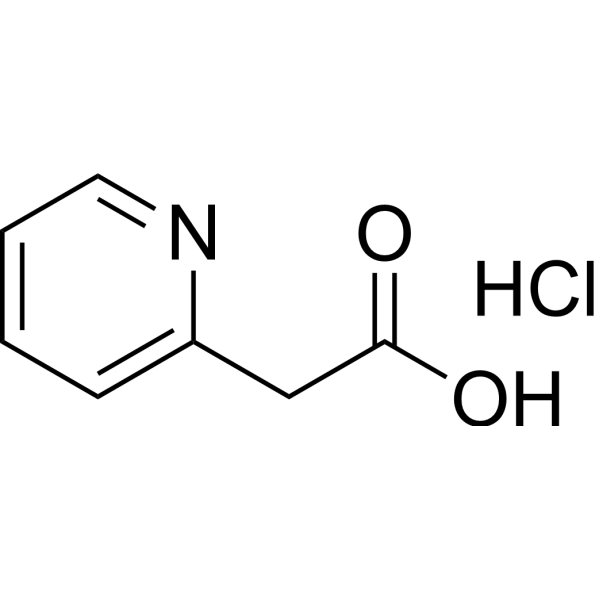
2-(Pyridin-2-yl)acetic acid hydrochloride is a heterocyclic aromatic carboxylic acid compound. 2-(Pyridin-2-yl)acetic acid hydrochloride can be used as an organic synthesis intermediate or a metal complex .
|
-
-
- HY-42565
-
|
|
Drug Intermediate
|
Others
|
|
(2R,3S)-2-(4-(Cyclopentylamino)phenyl)-1-(2-fluoro-6-methylbenzoyl)piperidine-3-carboxylic acid is a drug intermediate for synthesis of various active compounds.
|
-

-
- HY-Y0817R
-
|
Anhydrous sodium acetate (Standard)
|
Reference Standards
|
Cancer
|
|
Acetic acid sodium (Standard) (Anhydrous sodium acetate (Standard) is the analytical standard of Anhydrous sodium acetate. This product is intended for research and analytical applications. Acetic acid is a carboxylic acid and short-chain fatty acid (SCFAs). Acetic acid activates AMPK, increases ROS, cleaved caspase 9, PPARα, downregulates SREBP-1c, ChREBP expression. Acetic acid exhibits antifungal activity against Saccharomyces cerevisiae W303-1A. Acetic acid regulates energy metabolism. Acetic acid has anticancer activity against gastric cancer. Acetic acid induces writhing reaction and ulcerative colitis. Acetic acid can be used in the researches for gastric cancer, ulcerative colitis, hepatic steatosis, and pain .
|
-

-
- HY-W008253S
-
|
|
Endogenous Metabolite
|
Neurological Disease
Cancer
|
|
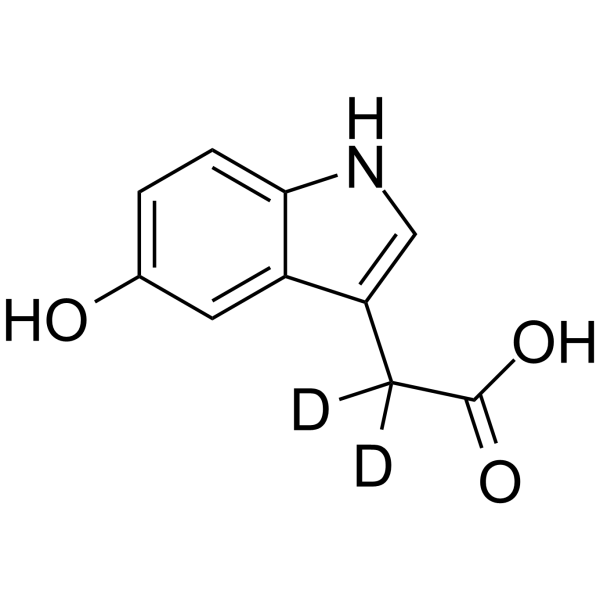
5-Hydroxyindole-3-acetic acid-d2 is the deuterium labeled 5-Hydroxyindole-3-acetic acid. 5-Hydroxyindole-3-acetic acid is the main metabolite of serotonin or metanephrines, which can be used as a biomarker of neuroendocrine tumors.
|
-
-
- HY-60264
-
-
-
- HY-W190729
-
|
|
PROTAC Linkers
|
Cancer
|
|
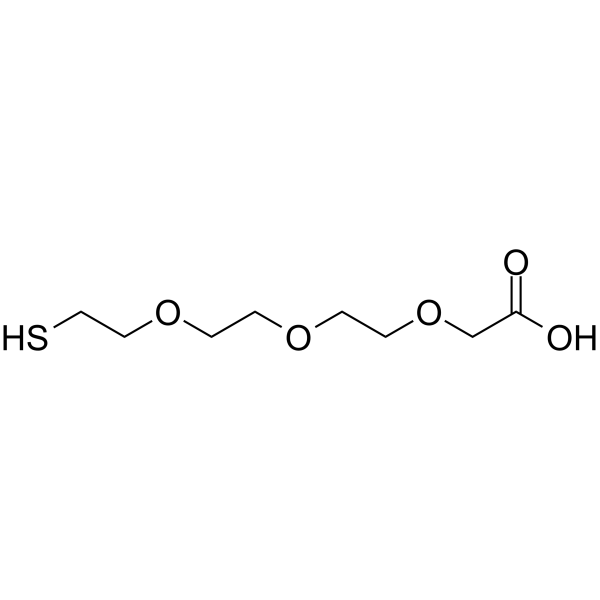
Thiol-PEG3-acetic acid is a PEG-based PROTAC linker that can be used in the synthesis of PROTACs .
|
-
-
- HY-W509381
-
-

-
- HY-I0207
-
|
|
Drug Intermediate
|
Others
|
|
2-(5-Iodo-2-methylbenzoyl)-5-(4-fluorophenyl)thiophene is a drug intermediate for synthesis of various active compounds.
|
-

-
- HY-W027691A
-
|
|
Drug Intermediate
|
Others
|
|
3-(Prop-2-yn-1-yloxy)aniline hydrochloride is a drug intermediate for synthesis of various active compounds.
|
-

-
- HY-W017510
-
|
Dipyrrolylmethane
|
MOFs
|
Others
|
|
Di(1H-pyrrol-2-yl)methane (Dipyrrolylmethane) is a metal-organic framework (MOF).
|
-

-
- HY-23660
-
|
|
Drug Intermediate
|
Others
|
|
5-Fluoro-2-(1H-pyrrol-1-yl)aniline is a drug intermediate for synthesis of various active compounds.
|
-

-
- HY-78698
-
|
|
Drug Intermediate
|
Others
|
|
tert-Butyl (4-(prop-2-yn-1-yloxy)benzyl)carbamate is a drug intermediate for synthesis of various active compounds.
|
-

-
- HY-W045684
-
|
|
PROTAC Linkers
|
Cancer
|
|
2-(Prop-2-yn-1-yloxy)tetrahydro-2H-pyran is a PROTAC linker that can be used in the synthesis of PROTACs.
|
-

-
- HY-W876242
-
|
|
PROTAC Linkers
|
Cancer
|
|
tert-Butyl 3-(prop-2-yn-1-yloxy)azetidine-1-carboxylate is a PROTAC linker that can be used in the synthesis of PROTACs.
|
-

-
- HY-W040723
-
-
-
- HY-23407
-
|
|
Drug Intermediate
|
Others
|
|
3,5-Dichloropyridine-4-acetic acid is a drug intermediate for synthesis of various active compounds.
|
-

-
- HY-W026075
-
|
|
PROTAC Linkers
|
Cancer
|
|
2-(Prop-2-yn-1-yloxy)acetic acid is a PROTAC linker that can be used in the synthesis of PROTACs.
|
-

-
- HY-W190963
-
|
|
PROTAC Linkers
|
Cancer
|
|
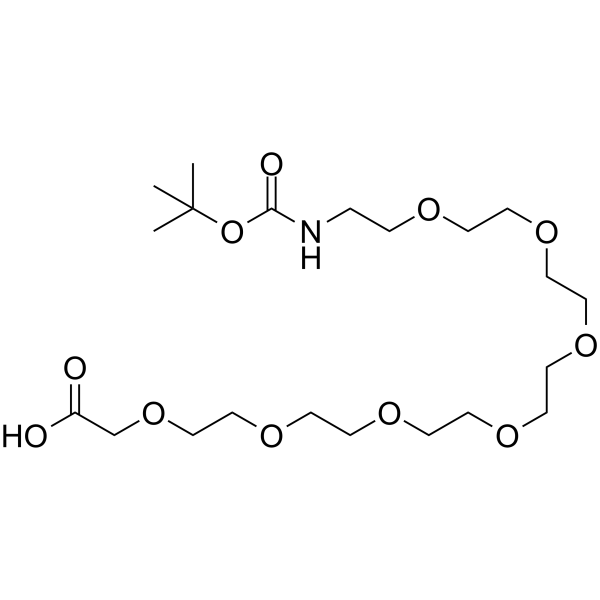
Boc-NH-PEG7-acetic acid is a PEG-based PROTAC linker that can be used in the synthesis of PROTACs .
|
-
-
- HY-W170184
-
|
|
PROTAC Linkers
|
Cancer
|
|
4-(Prop-2-yn-1-yloxy)piperidine hydrochloride is a PROTAC linker that can be used in the synthesis of PROTACs.
|
-

-
- HY-17510R
-
|
(±)-Gossypol-Acetic acid (Standard); BL-193 (Acetic acid) (Standard)
|
Reference Standards
Bcl-2 Family
|
Cancer
|
|
Gossypol (acetic acid) (Standard) is the analytical standard of Gossypol (acetic acid). This product is intended for research and analytical applications. Gossypol acetic acid ((±)-Gossypol-acetic acid) binds to Bcl-xL protein and Bcl-2 protein with Kis of 0.5-0.6 μM and 0.2-0.3 mM, respectively.
|
-

-
- HY-W482593
-
|
5-(4-Pyridyl)dipyrromethane
|
MOFs
|
Others
|
|
4-(Di(1H-pyrrol-2-yl)methyl)pyridine (5-(4-Pyridyl)dipyrromethane) is a metal-organic framework (MOF).
|
-

-
- HY-W012791
-
-
-
- HY-W015359
-
-
-
- HY-W008253S3
-
-
-
- HY-109166
-
-

-
- HY-154334
-
|
|
Nucleoside Antimetabolite/Analog
|
Cancer
|
|
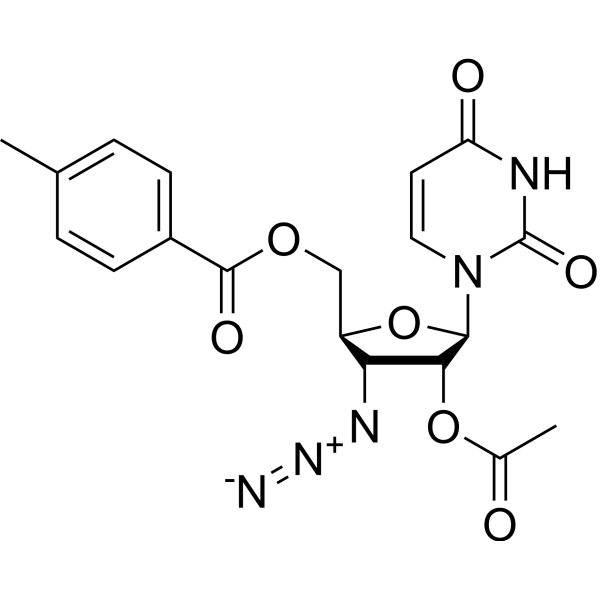
2’-O-Acetyl-3’-azido-5’-O-(4-methylbenzoyl)-3’-deoxyuridine is a purine nucleoside analog. Purine nucleoside analogs have broad antitumor activity targeting indolent lymphoid malignancies. Anticancer mechanisms in this process rely on inhibition of DNA synthesis, induction of apoptosis, etc . 2’-O-Acetyl-3’-azido-5’-O-(4-methylbenzoyl)-3’-deoxyuridine is a click chemistry reagent, it contains an Azide group and can undergo copper-catalyzed azide-alkyne cycloaddition reaction (CuAAc) with molecules containing Alkyne groups. It can also undergo strain-promoted alkyne-azide cycloaddition (SPAAC) reactions with molecules containing DBCO or BCN groups.
|
-
-
- HY-154154
-
|
|
Nucleoside Antimetabolite/Analog
|
Cancer
|
|
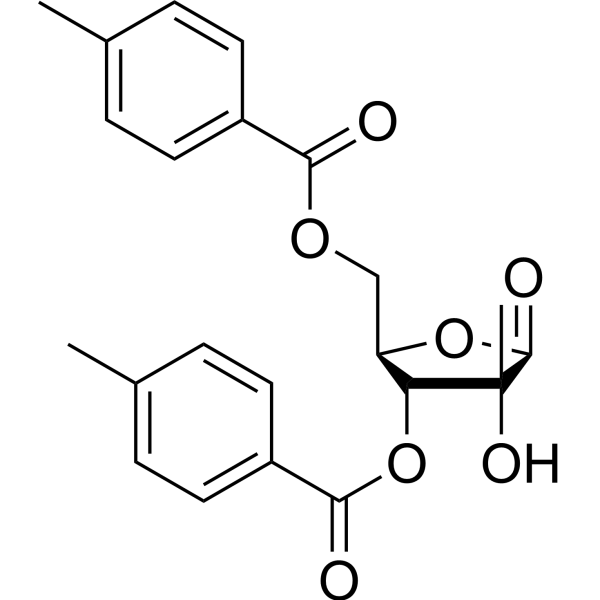
3,5-Bis-O-(4-methylbenzoyl)-2-C-methyl-D-ribonic acid gama-lactone is a purine nucleoside analog. Purine nucleoside analogs have broad antitumor activity targeting indolent lymphoid malignancies. Anticancer mechanisms in this process rely on inhibition of DNA synthesis, induction of apoptosis, etc .
|
-
-
- HY-139040R
-
|
TetradecylthioAcetic acid (Standard)
|
PPAR
Reference Standards
|
Metabolic Disease
|
|
2-(Tetradecylthio)acetic acid (Standard) is the analytical standard of 2-(Tetradecylthio)acetic acid. This product is intended for research and analytical applications. 2-Tetradecylthio acetic acid is a pan-peroxisome proliferator activated receptor (pan-PPAR) activator. 2-Tetradecylthio acetic acid induces hypolipidemia. 2-Tetradecylthio acetic acid reduces plasma lipids and enhances hepatic fatty acid oxidation in rodents. 2-Tetradecylthio acetic acid increases the expression of genes involved in fatty acid uptake, activation, accumulation, and oxidation .
|
-

-
- HY-RS11200
-
|
|
Small Interfering RNA (siRNA)
|
Others
|
|
PROP1 Human Pre-designed siRNA Set A contains three designed siRNAs for PROP1 gene (Human), as well as a negative control, a positive control, and a FAM-labeled negative control.
|
-
PROP1 Human Pre-designed siRNA Set A
PROP1 Human Pre-designed siRNA Set A
- HY-W145557
-
-

- HY-W588203
-
|
3-(1H-pyrrol-2-yl)pyridine
|
Drug Derivative
|
Neurological Disease
|
|
β-Nornicotyrine (3-(1H-Pyrrol-2-yl)pyridine) is an alkaloid that has been found in N. tabacum. β-Nornicotyrine can be used for research on neurological diseases .
|
-

- HY-W089436
-
|
|
PROTAC Linkers
|
Cancer
|
|
3-(4-Bromophenyl)prop-2-yn-1-ol is a PROTAC linker that can be used in the synthesis of PROTACs.
|
-

- HY-W748514
-
|
|
Biochemical Assay Reagents
Endogenous Metabolite
|
Inflammation/Immunology
Cancer
|
|
(4-(Bromomethyl)phenyl)(4-(prop-2-yn-1-yloxy)phenyl)methanone is a compound with anticancer activity that can effectively inhibit the growth of tumor cells and shows potential application value in compound development. The compound has also been studied for the improvement of certain neuropathological conditions and as a candidate compound for anti-inflammatory inhibition.
|
-

- HY-W746828
-
-

- HY-176145S
-
-

- HY-115249R
-
|
|
Parasite
Antibiotic
Bacterial
Reference Standards
|
Infection
|
|
Metronidazole acetic acid (Standard) is the analytical standard of Metronidazole acetic acid. This product is intended for research and analytical applications. Metronidazole acetic acid is a metabolite of Metronidazole with mutagenic activity in bacteria. Metronidazole is a nitroimidazole antibiotic, amebicide, and antiprotozoal agent used particularly for anaerobic bacteria and protozoa .
|
-

- HY-163021
-
-
- HY-W201367S
-
|
|
Isotope-Labeled Compounds
|
Others
|
|
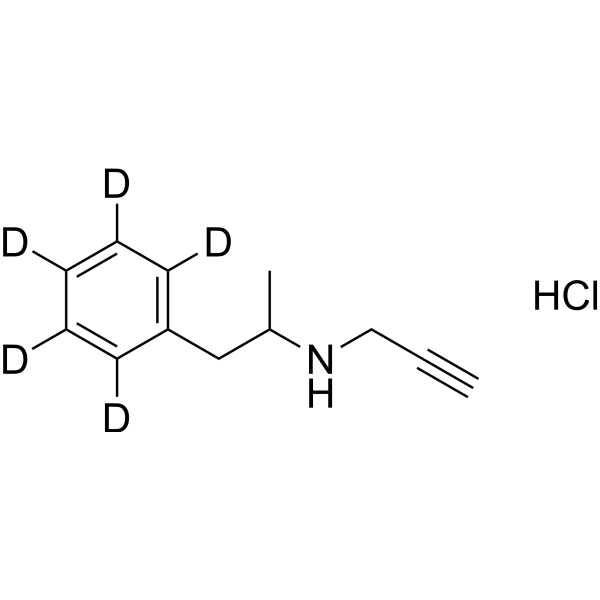
(1-Phenylpropan-2-yl)(prop-2-yn-1-yl)amine-d5 (hydrochloride) is deuterium labeled (1-Phenylpropan-2-yl)(prop-2-yn-1-yl)amine hydrochloride. (1-Phenylpropan-2-yl)(prop-2-yn-1-yl)amine-d5 (hydrochloride) is a click chemistry reagent, it contains an Alkyne group and can undergo copper-catalyzed azide-alkyne cycloaddition (CuAAc) with molecules containing Azide groups.
|
-
- HY-W007566R
-
-

- HY-163023
-
|
|
Hapten
|
Others
|
|
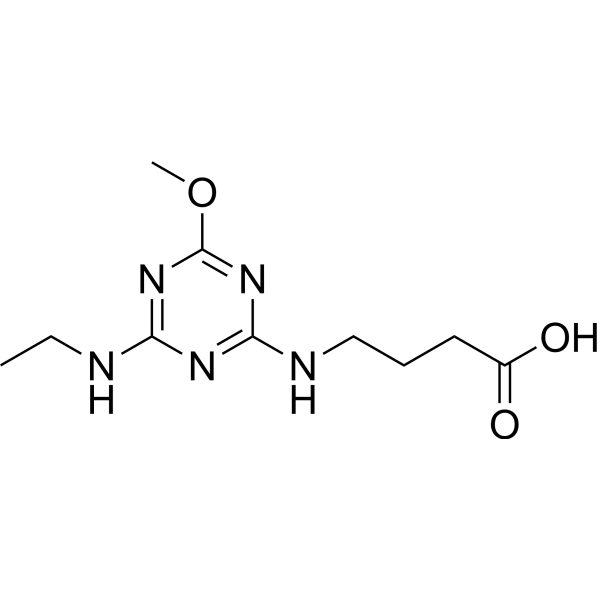
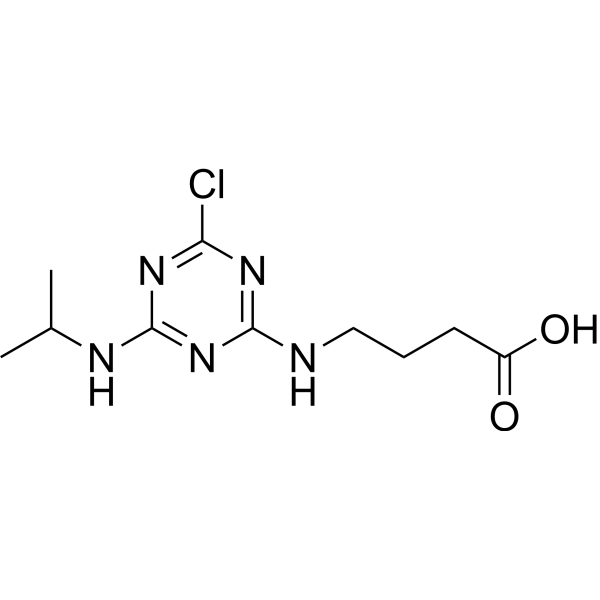
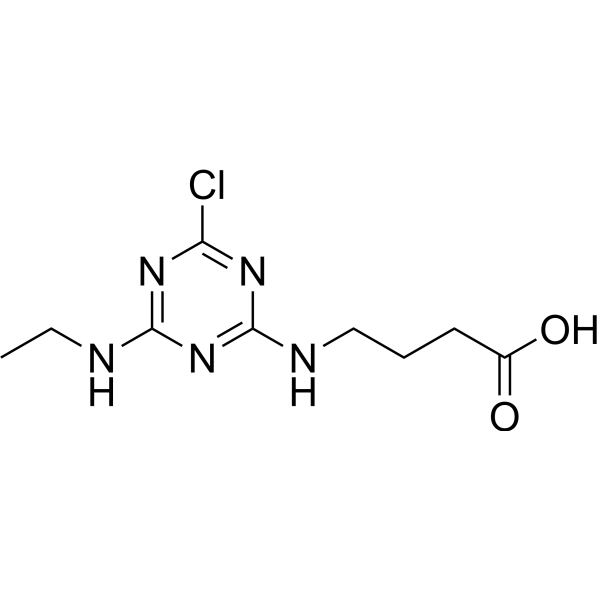
Atrazine-acetic acid is an immunizing and heterologous hapten.
|
-
- HY-163022
-
-
- HY-W190843
-
|
|
PROTAC Linkers
|
Cancer
|
|
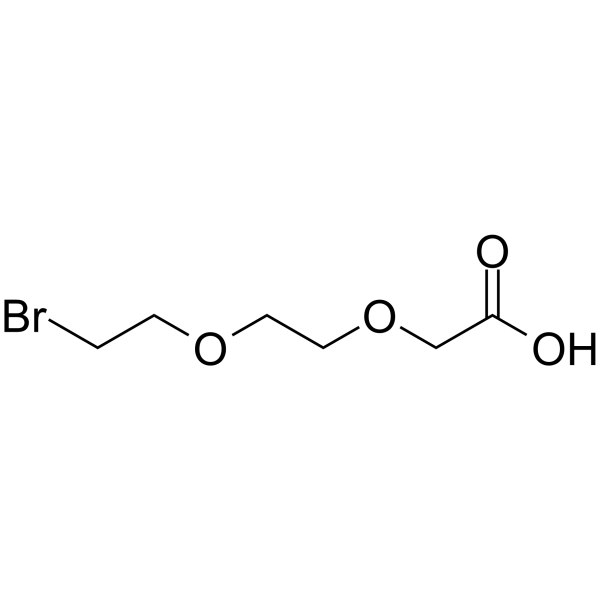
Bromo-PEG2-acetic acid is a PEG-based PROTAC linker that can be used in the synthesis of PROTACs .
|
-
- HY-W190959
-
|
|
PROTAC Linkers
|
Cancer
|
|
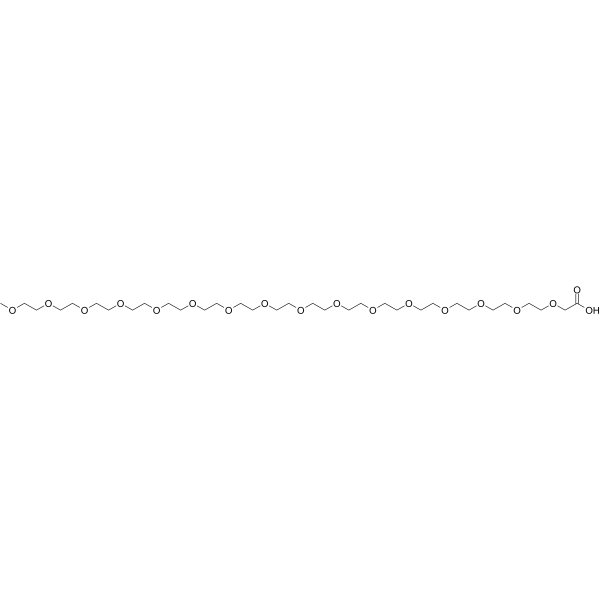
m-PEG15-acetic acid is a PEG-based PROTAC linker that can be used in the synthesis of PROTACs .
|
-
- HY-W190960
-
|
|
PROTAC Linkers
|
Cancer
|
|
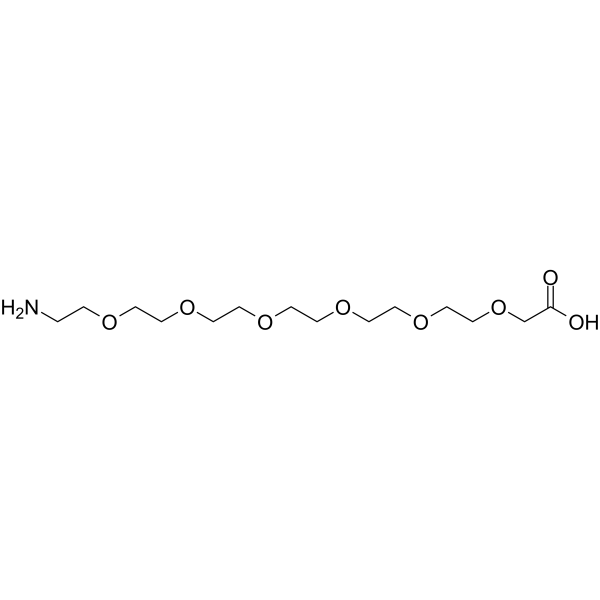
Amino-PEG6-acetic acid is a PEG-based PROTAC linker that can be used in the synthesis of PROTACs .
|
-
- HY-W010448R
-
-

- HY-W800687
-
|
|
Biochemical Assay Reagents
|
Others
|
|
Tetra(3-methoxy-n-(prop-2-ynyl)propanamide) methane is a 4-branched molecule with propargyl groups that can be linked to azide-containing biomolecules via Click Chemistry.
|
-

- HY-W725208
-
-

- HY-W097331
-
-
- HY-W015060S1
-
|
|
Endogenous Metabolite
|
Others
|
|
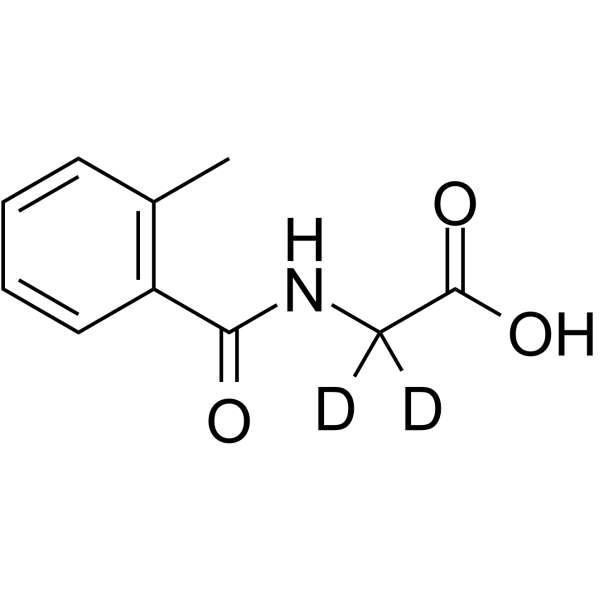
2-(2-Methylbenzamido)acetic acid-d2 is the deuterium labeled 2-(2-Methylbenzamido)acetic acid. 2-(2-Methylbenzamido)acetic acid is a metabolite detected in urine.
|
-
- HY-W088026R
-
|
4-Oxo-4-(p-tolyl)butanoic acid (Standard)
|
Reference Standards
|
|
|
3-(4-Methylbenzoyl)propionic acid (Standard) is the analytical standard of 3-(4-Methylbenzoyl)propionic acid. This product is intended for research and analytical applications.
|
-

- HY-W176567
-
|
5-(1H-pyrrol-1-yl)isophthalic acid
|
MOFs
|
Others
|
|
5-(1h-Pyrrol-1-yl)benzene-1,3-dicarboxylic acid (5-(1H-Pyrrol-1-yl)isophthalic acid) is a metal-organic framework (MOF).
|
-

- HY-N1754
-
|
|
Others
|
Others
|
|
3-(4-Methoxyphenyl)-1-(pyrrol-1-yl)propan-1-one is a Alkaloids product that can be isolated from the herbs of Piper nigrum .
|
-

- HY-W583812
-
|
|
PROTAC Linkers
|
Cancer
|
|
Cbz-PEG2-prop-1-yne is a PROTAC linker that can be used in the synthesis of PROTACs.
|
-

- HY-W583811
-
|
|
PROTAC Linkers
|
Cancer
|
|
Cbz-PEG3-prop-1-yne is a PROTAC linker that can be used in the synthesis of PROTACs.
|
-

- HY-W112695
-
|
|
MOFs
|
Others
|
|
2-(Prop-2-yn-1-yloxy)terephthalic acid is a metal-organic framework (MOF).
|
-

- HY-W456514
-
|
|
MOFs
|
Others
|
|
5-(Prop-2-yn-1-yloxy)isophthalic acid is a metal-organic framework (MOF).
|
-

- HY-176972
-
|
|
ADC Payload
DNA/RNA Synthesis
|
Cancer
|
|
Di(MMY-SJG)-Ph-prop-2-yne-1-sulfonic acid (Compound 5) is a cytotoxic pyrrolobenzodiazepine (PBD) dimer derivative. Di(MMY-SJG)-Ph-prop-2-yne-1-sulfonic acid exhibits moderate DNA alkylating activity. Di(MMY-SJG)-Ph-prop-2-yne-1-sulfonic acid can be used as the payload of ADC, thereby demonstrating strong antigen-dependent cytotoxicity .
|
-

- HY-W075229
-
|
|
MOFs
|
Others
|
|
2-Hydroxy-4-(prop-2-yn-1-yloxy)benzaldehyde is a metal-organic framework (MOF).
|
-

- HY-W112103
-
|
2,2'-pyrrolylpyridine
|
MOFs
|
Others
|
|
2-(1H-Pyrrol-2-yl)pyridine (2,2'-Pyrrolylpyridine) is a metal-organic framework (MOF).
|
-

- HY-W674400
-
|
|
PROTAC Linkers
|
Cancer
|
|
Tert-butyl 4-(2-prop-2-ynoxyethyl)piperazine-1-carboxylate is a PROTAC linker that can be used in the synthesis of PROTACs.
|
-

- HY-W570678
-
|
|
PROTAC Linkers
|
Cancer
|
|
tert-Butyldimethyl(2-(prop-2-yn-1-yloxy)ethoxy)silane is a PROTAC linker that can be used in the synthesis of PROTACs.
|
-

- HY-W171070
-
|
|
MOFs
|
Others
|
|
5-(2,5-Dihydro-1h-pyrrol-1-yl)isophthalic acid is a metal-organic framework (MOF).
|
-

- HY-W130248R
-
|
|
Reference Standards
|
|
|
5-(2,5-Dimethyl-4-(prop-1-en-1-yl)phenoxy)-2,2-dimethylpentanoic acid (Standard) is the analytical standard of 5-(2,5-Dimethyl-4-(prop-1-en-1-yl)phenoxy)-2,2-dimethylpentanoic acid. This product is intended for research and analytical applications.
|
-

- HY-W796572
-
|
|
PROTAC Linkers
|
Cancer
|
|
2,5-Dioxopyrrolidin-1-yl 2-(2-(prop-2-yn-1-yloxy)ethoxy)acetate is a PROTAC linker that can be used in the synthesis of PROTACs.
|
-

- HY-P11769
-
|
|
CGRP Receptor
|
Cancer
|
|
RM2 is a GRPr antagonist. RM2 selectively binds to GRPr, blocks agonist-induced receptor internalization, and inhibits agonist-triggered intracellular calcium mobilization. RM2 can be used in studies related to prostate cancer .
|
-

- HY-W800833
-
|
|
Biochemical Assay Reagents
|
Others
|
|
Benzyl N-[2-(prop-2-enamido)ethyl]carbamate is a short aliphatic linker featuring a Cbz-protected amine and an acrylamide. Acrylamide is a Michael acceptor which is a good Michael acceptor which can be used in thiol-based bioconjugation or polymerization. Meanwhile, the Cbz protecting group can be removed using Pd-C hydrogenation to reveal a free amine that can participate in a wide variety of reactions such as couplings or reductive amination.
|
-
![Benzyl N-[2-(prop-2-enamido)ethyl]carbamate](//file.medchemexpress.com/product_pic/hy-w800833.gif)
- HY-W190830
-
-

- HY-W251756
-
|
|
Biochemical Assay Reagents
|
Others
|
|
3-(2-Iodoethoxy)prop-1-yne is a crosslinker that can be used in copper catalyzed azide-alkyne Click Chemistry to form a stable triazole linkage with azides. The iodine (I) acts as a good leaving group for nucleophilic substitution reactions.
|
-

- HY-W424243
-
|
|
PROTAC Linkers
|
Cancer
|
|
Tert-butyl 7-(prop-2-yn-1-yl)-2,7-diazaspiro[3.5]Nonane-2-carboxylate is a PROTAC linker that can be used in the synthesis of PROTACs.
|
-
![Tert-butyl 7-(prop-2-yn-1-yl)-2,7-diazaspiro[3.5]Nonane-2-carboxylate](//file.medchemexpress.com/product_pic/hy-w424243.gif)
- HY-N17408
-
|
|
Others
|
Others
|
|
(E)-2-(2-Hydroxy-4-methylphenyl)-prop-1-en-1-yl acetate is a natural product. (E)-2-(2-Hydroxy-4-methylphenyl)-prop-1-en-1-yl acetate can be isolated in the aerial parts of Eupatorium fortunei .
|
-

- HY-W112892
-
|
|
MOFs
|
Others
|
|
5'-(4-Carboxyphenyl)-2'-(prop-2-yn-1-yloxy)-[1,1':3',1''-terphenyl]-4,4''-dicarboxylicacid is a metal-organic framework (MOF).
|
-
![5'-(4-Carboxyphenyl)-2'-(prop-2-yn-1-yloxy)-[1,1':3',1''-terphenyl]-4,4''-dicarboxylicacid](//file.medchemexpress.com/product_pic/hy-w112892.gif)
- HY-W451460
-
|
|
Biochemical Assay Reagents
|
Others
|
|
2,5-Dioxopyrrolidin-1-yl 2-(prop-2-yn-1-yloxy)acetate is a Click Chemistry reagent with a propargyl group and an NHS ester group. The propargyl group can react with biomolecules containing azide group via copper catalyzed Click Chemistry reaction. The NHS ester is an amine reactive group which can be used for derivatizing peptides, antibodies, amine coated surfaces, etc.
|
-

- HY-W588962
-
|
|
MOFs
|
Others
|
|
5-(2,5-Dioxo-2,5-dihydro-1H-pyrrol-1-yl)benzene-1,3-dicarboxylic acid is a metal-organic framework (MOF).
|
-

- HY-W014242
-
|
|
Aldose Reductase
|
Metabolic Disease
|
|
2-(2-Chlorobenzamido)acetic acid is an aldose reductase inhibitor with an IC50 of 31 μM. 2-(2-Chlorobenzamido)acetic acid can be used for the research of chronic diabetes .
|
-

- HY-W006267R
-
|
4-Cl-IAA (Standard)
|
Endogenous Metabolite
Reference Standards
|
Others
|
|
4-Chloroindole-3-acetic acid (Standard) is the analytical standard of 4-Chloroindole-3-acetic acid (HY-W006267). This product is intended for research and analytical applications. 4-Chloroindole-3-acetic acid (4-Cl-IAA) is a chlorinated analogue of indole-3-acetic acid (IAA) (HY-18569) auxin that functions as a plant hormone, which is found in the seeds of Medicago truncatula、Melilotus indicus and Trifolium .
|
-

- HY-W012791S1
-
-
- HY-N16876
-
-

- HY-W015060S
-
|
|
Endogenous Metabolite
|
Others
|
|
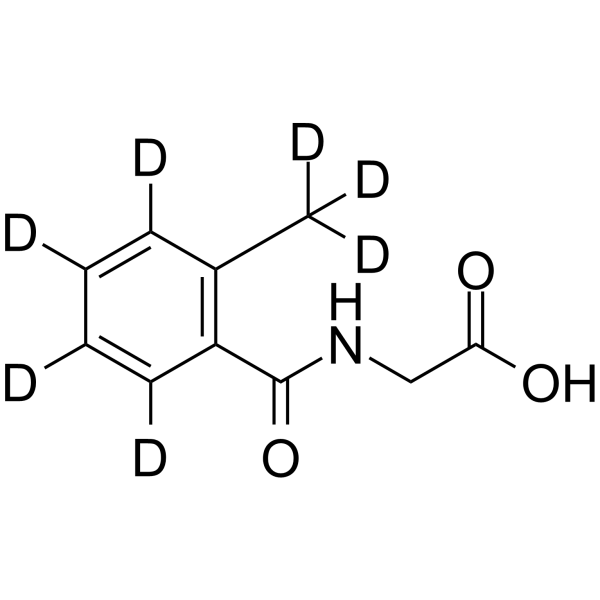
2-(2-Methylbenzamido)acetic acid-d7 is the deuterium labeled 2-(2-Methylbenzamido)acetic acid. 2-(2-Methylbenzamido)acetic acid is a metabolite detected in urine.
|
-
- HY-W012791S
-
-
| Cat. No. |
Product Name |
Type |
| Cat. No. |
Product Name |
Type |
-
- HY-Y0319B
-
|
Potassium acetate
|
Biochemical Assay Reagents
|
|
Acetic acid potassium 99% (Potassium acetate) is a potassium salt employed to replenish electrolytes, for restoration of water-electrolyte balance. Acetic acid potassium 99% can employ in DNA and protein purification. Acetic acid potassium 99% has been used to prepare neutralizing solution for alkaline lysis of bacteria and activated carbon .
|
-
- HY-Y0319D
-
|
|
Biochemical Assay Reagents
|
|
Acetic acid lead is a carboxylic acid and short-chain fatty acid (SCFAs). Magnesium acetate tetrahydrate activates AMPK, increases ROS, cleaved caspase 9, PPARα, downregulates SREBP-1c, ChREBP expression. Acetic acid lead exhibits antifungal activity against Saccharomyces cerevisiae W303-1A. Acetic acid lead regulates energy metabolism. Acetic acid lead has anticancer activity against gastric cancer. Acetic acid lead induces writhing reaction and ulcerative colitis. Acetic acid lead can be used in the researches for gastric cancer, ulcerative colitis, hepatic steatosis, and pain .
|
-
- HY-W016825
-
|
|
Biochemical Assay Reagents
|
|
2-(Pyridin-2-yl)acetic acid hydrochloride is a heterocyclic aromatic carboxylic acid compound. 2-(Pyridin-2-yl)acetic acid hydrochloride can be used as an organic synthesis intermediate or a metal complex .
|
-
- HY-W145557
-
|
|
Biochemical Assay Reagents
|
|
4-Methoxyphenyl 3,4-O-isopropylidene-2,6-bis-O-(4-methylbenzoyl)-β-D-galactopyranoside is a biochemical reagent.
|
-
- HY-W190830
-
| Cat. No. |
Product Name |
Target |
Research Area |
-
- HY-W012883
-
-
- HY-P10579
-
123B9
1 Publications Verification
|
Ephrin Receptor
|
Cancer
|
|
123B9, a tumor-homing agent, is a potent and selective EphA2 agonist with a Kd value of 4.0 μM. 123B9 selectively targets the EphA2 tyrosine kinase receptor ligand-binding domain. 123B9 does not appreciably inhibit the ligand binding domains of the most closely related EphA3 and EphA4 receptors .
|
-
- HY-60264
-
-
- HY-W040723
-
-
- HY-W012791
-
-
- HY-W015359
-
-
- HY-109166
-
-
- HY-P11769
-
|
|
CGRP Receptor
|
Cancer
|
|
RM2 is a GRPr antagonist. RM2 selectively binds to GRPr, blocks agonist-induced receptor internalization, and inhibits agonist-triggered intracellular calcium mobilization. RM2 can be used in studies related to prostate cancer .
|
| Cat. No. |
Product Name |
Category |
Target |
Chemical Structure |
-
- HY-W008253
-
-
-
- HY-17510
-
-
-
- HY-W007566
-
-
-
- HY-W006267
-
-
-
- HY-W008253R
-
-
-
- HY-Y0319D
-
|
|
Structural Classification
Classification of Application Fields
Ketones, Aldehydes, Acids
Other Diseases
Endogenous metabolite
Disease Research Fields
Source Classification
|
Endogenous Metabolite
AMPK
Reactive Oxygen Species (ROS)
Caspase
Fungal
PPAR
|
|
Acetic acid lead is a carboxylic acid and short-chain fatty acid (SCFAs). Magnesium acetate tetrahydrate activates AMPK, increases ROS, cleaved caspase 9, PPARα, downregulates SREBP-1c, ChREBP expression. Acetic acid lead exhibits antifungal activity against Saccharomyces cerevisiae W303-1A. Acetic acid lead regulates energy metabolism. Acetic acid lead has anticancer activity against gastric cancer. Acetic acid lead induces writhing reaction and ulcerative colitis. Acetic acid lead can be used in the researches for gastric cancer, ulcerative colitis, hepatic steatosis, and pain .
|
-
-
- HY-17510R
-
-
-
- HY-W588203
-
-
-
- HY-W007566R
-
-
-
- HY-W010448R
-
-
-
- HY-N1754
-
-
-
- HY-N17408
-
-
-
- HY-W006267R
-
-
-
- HY-N16876
-
-
| Cat. No. |
Product Name |
Chemical Structure |
-
- HY-W008253S2
-
|
|
|
5-Hydroxyindole-3-acetic acid-d5 is the deuterium labeled 5-Hydroxyindole-3-acetic acid (HY-W008253) . 5-Hydroxyindole-3-acetic acid is the main metabolite of serotonin or metanephrines, which can be used as a biomarker of neuroendocrine tumors .
|
-
-
- HY-W008253S1
-
|
|
|
5-Hydroxyindole-3-acetic acid-d6 is the deuterium labeled 5-Hydroxyindole-3-acetic acid. 5-Hydroxyindole-3-acetic acid is the main metabolite of serotonin or metanephrines, which can be used as a biomarker of neuroendocrine tumors.
|
-
-
- HY-W008253S
-
|
|
|
5-Hydroxyindole-3-acetic acid-d2 is the deuterium labeled 5-Hydroxyindole-3-acetic acid. 5-Hydroxyindole-3-acetic acid is the main metabolite of serotonin or metanephrines, which can be used as a biomarker of neuroendocrine tumors.
|
-
-
- HY-W008253S3
-
|
|
|
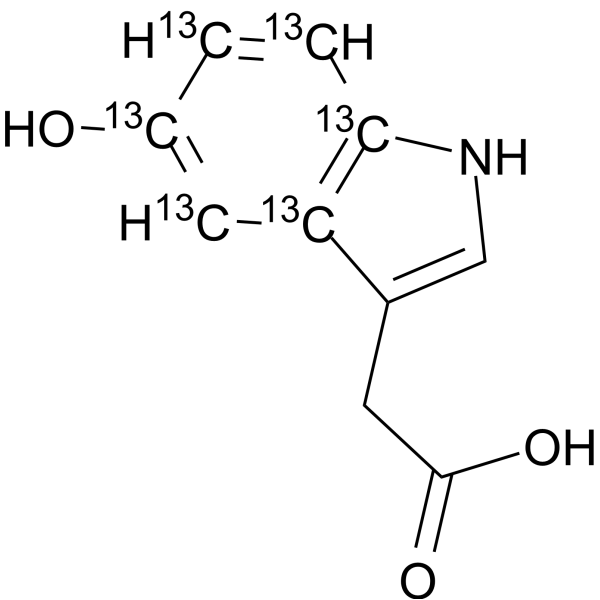
5-Hydroxyindole-3-acetic acid- 13C6 is the 13C-labeled 5-Hydroxyindole-3-acetic acid. 5-Hydroxyindole-3-acetic acid is the main metabolite of serotonin or metanephrines, which can be used as a biomarker of neuroendocrine tumors.
|
-
-
- HY-W746828
-
|
|
|
Oxindole-3-acetic acid- 13C6 is 13C labeled Oxindole-3-acetic acid .
|
-
-
- HY-176145S
-
|
|
|
N-Benzyl-2-iodo-N-(prop-2-yn-1-yl)acetamide- 13C is the 13C-labeled N-Benzyl-2-iodo-N-(prop-2-yn-1-yl)acetamide.
|
-
-
- HY-W201367S
-
|
|
|
(1-Phenylpropan-2-yl)(prop-2-yn-1-yl)amine-d5 (hydrochloride) is deuterium labeled (1-Phenylpropan-2-yl)(prop-2-yn-1-yl)amine hydrochloride. (1-Phenylpropan-2-yl)(prop-2-yn-1-yl)amine-d5 (hydrochloride) is a click chemistry reagent, it contains an Alkyne group and can undergo copper-catalyzed azide-alkyne cycloaddition (CuAAc) with molecules containing Azide groups.
|
-
-
- HY-W015060S1
-
|
|
|
2-(2-Methylbenzamido)acetic acid-d2 is the deuterium labeled 2-(2-Methylbenzamido)acetic acid. 2-(2-Methylbenzamido)acetic acid is a metabolite detected in urine.
|
-
-
- HY-W012791S1
-
|
|
|
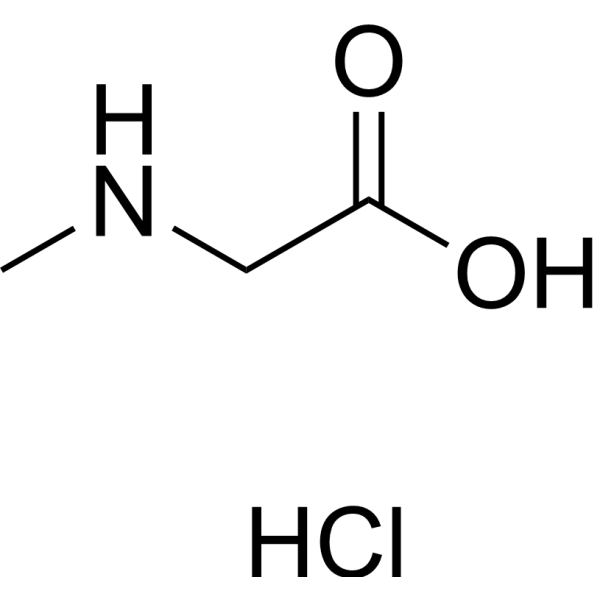
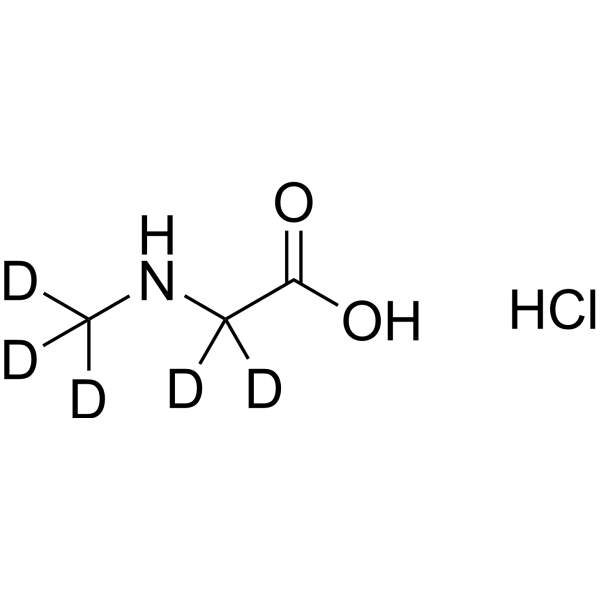
2-(Methylamino)acetic acid-d5 (hydrochloride) is the deuterium labeled 2-(Methylamino)acetic acid.
|
-
-
- HY-W015060S
-
|
|
|
2-(2-Methylbenzamido)acetic acid-d7 is the deuterium labeled 2-(2-Methylbenzamido)acetic acid. 2-(2-Methylbenzamido)acetic acid is a metabolite detected in urine.
|
-
-
- HY-W012791S
-
|
|
|
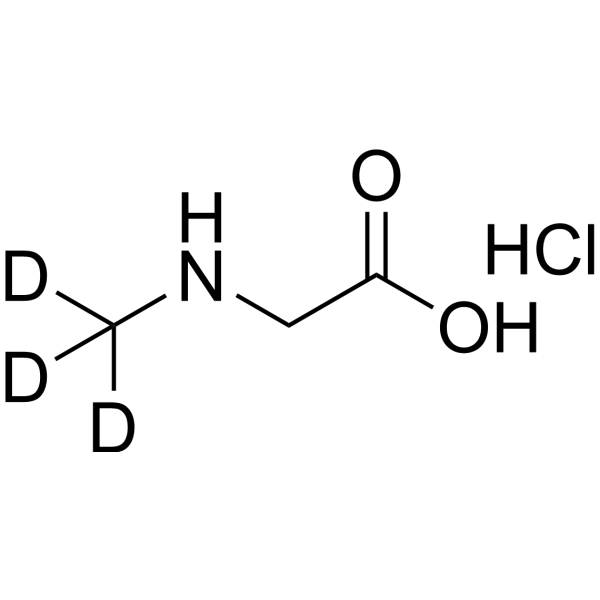
2-(Methylamino)acetic acid-d3 (hydrochloride) is the deuterium labeled 2-(Methylamino)acetic acid .
|
-
| Cat. No. |
Product Name |
|
Classification |
-
- HY-154334
-
|
|
|
Azide
|
|
2’-O-Acetyl-3’-azido-5’-O-(4-methylbenzoyl)-3’-deoxyuridine is a purine nucleoside analog. Purine nucleoside analogs have broad antitumor activity targeting indolent lymphoid malignancies. Anticancer mechanisms in this process rely on inhibition of DNA synthesis, induction of apoptosis, etc . 2’-O-Acetyl-3’-azido-5’-O-(4-methylbenzoyl)-3’-deoxyuridine is a click chemistry reagent, it contains an Azide group and can undergo copper-catalyzed azide-alkyne cycloaddition reaction (CuAAc) with molecules containing Alkyne groups. It can also undergo strain-promoted alkyne-azide cycloaddition (SPAAC) reactions with molecules containing DBCO or BCN groups.
|
-
- HY-W748514
-
|
|
|
Alkynes
|
|
(4-(Bromomethyl)phenyl)(4-(prop-2-yn-1-yloxy)phenyl)methanone is a compound with anticancer activity that can effectively inhibit the growth of tumor cells and shows potential application value in compound development. The compound has also been studied for the improvement of certain neuropathological conditions and as a candidate compound for anti-inflammatory inhibition.
|
-
- HY-W201367S
-
|
|
|
Alkynes
|
|
(1-Phenylpropan-2-yl)(prop-2-yn-1-yl)amine-d5 (hydrochloride) is deuterium labeled (1-Phenylpropan-2-yl)(prop-2-yn-1-yl)amine hydrochloride. (1-Phenylpropan-2-yl)(prop-2-yn-1-yl)amine-d5 (hydrochloride) is a click chemistry reagent, it contains an Alkyne group and can undergo copper-catalyzed azide-alkyne cycloaddition (CuAAc) with molecules containing Azide groups.
|
| Cat. No. |
Product Name |
|
Classification |
-
- HY-154334
-
|
|
|
Nucleoside Analogs
Uridine
|
|
2’-O-Acetyl-3’-azido-5’-O-(4-methylbenzoyl)-3’-deoxyuridine is a purine nucleoside analog. Purine nucleoside analogs have broad antitumor activity targeting indolent lymphoid malignancies. Anticancer mechanisms in this process rely on inhibition of DNA synthesis, induction of apoptosis, etc . 2’-O-Acetyl-3’-azido-5’-O-(4-methylbenzoyl)-3’-deoxyuridine is a click chemistry reagent, it contains an Azide group and can undergo copper-catalyzed azide-alkyne cycloaddition reaction (CuAAc) with molecules containing Alkyne groups. It can also undergo strain-promoted alkyne-azide cycloaddition (SPAAC) reactions with molecules containing DBCO or BCN groups.
|
-
- HY-154154
-
|
|
|
Nucleoside Analogs
|
|
3,5-Bis-O-(4-methylbenzoyl)-2-C-methyl-D-ribonic acid gama-lactone is a purine nucleoside analog. Purine nucleoside analogs have broad antitumor activity targeting indolent lymphoid malignancies. Anticancer mechanisms in this process rely on inhibition of DNA synthesis, induction of apoptosis, etc .
|
-
- HY-RS11200
-
|
|
|
siRNAs
Human Pre-designed siRNA Sets
|
|
PROP1 Human Pre-designed siRNA Set A contains three designed siRNAs for PROP1 gene (Human), as well as a negative control, a positive control, and a FAM-labeled negative control.
|
Your information is safe with us. * Required Fields.
Inquiry Information
- Product Name:
- Cat. No.:
- Quantity:
- MCE Japan Authorized Agent:





![Benzyl N-[2-(prop-2-enamido)ethyl]carbamate](http://file.medchemexpress.com/product_pic/hy-w800833.gif)


![Tert-butyl 7-(prop-2-yn-1-yl)-2,7-diazaspiro[3.5]Nonane-2-carboxylate](http://file.medchemexpress.com/product_pic/hy-w424243.gif)

![5'-(4-Carboxyphenyl)-2'-(prop-2-yn-1-yloxy)-[1,1':3',1''-terphenyl]-4,4''-dicarboxylicacid](http://file.medchemexpress.com/product_pic/hy-w112892.gif)





